A family tree can tell you a lot about where your family came from. You can follow parents, grandparents, great-grandparents, and other ancestors as far back as your records allow. But sometimes you need more than names, dates, and family connections.
That is where a genogram can be useful.
A generation genogram looks somewhat like a family tree, but it shows additional family details. Along with biological and legal relationships, it can record important events, health conditions, and the nature of relationships between the members of a family.
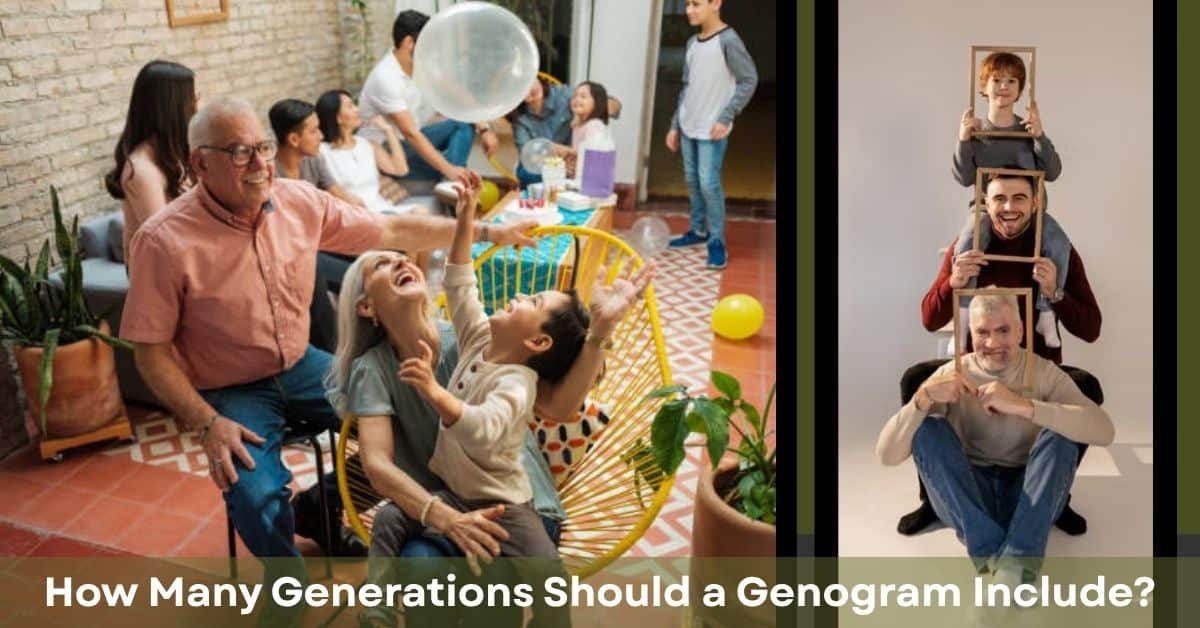
Three generations is the usual starting point to use a genogram. That means grandparents, parents, and the person or children being studied. In some situations, however, it makes sense to go further back.
What Is a Genogram?
A genogram is a multi-generational detailed diagram of a family. It can show information that would not appear on a standard genealogy chart.
A traditional family tree is mainly concerned with lineage. It helps people get answers to questions like who their parents were, who they married, who their children were, and how two people are related.
A genogram can include these details, but it can also show information about family dynamics, health history, significant events, and other patterns.
This is one reason genograms are commonly used in counseling, psychology, social work, healthcare, and family studies. They give professionals a way to look at a family over several generations rather than examining one person in isolation.
Why Do People Need a Genogram?
If your goal is simply to document your ancestors, a regular family tree may be all you need. Genealogy software such as Family Tree Maker is designed specifically for this type of research.
A generation genogram is useful when you want to look at relationships and patterns within the family.
For example, a person may be interested in:
- Family relationships and communication
- Repeated marriages, separations, or divorces
- Family health history
- Adoption and blended-family relationships
- Recurring behavioral patterns
- Major events that affected several generations
- The relationship between different branches of a family
The visual format can make connections easier to notice.
That does not mean a genogram can tell you why a particular family pattern exists. It is a way of organizing information and starting a conversation or further research.
Who Uses Genograms?
Genograms are used in many areas, and the reasons for creating one vary from person to person.
Therapists and Counselors
Family therapists often use genograms to learn about a family’s structure and relationships. Looking at several generations can provide background that may be missed when the discussion is limited to the immediate family.
Social Workers
Social workers can use genograms when working with families, children, and individuals. A genogram can help organize information about parents, siblings, caregivers, marriages, separations, and other important relationships.
Doctors and Healthcare Professionals
A family health history can sometimes reveal that a particular condition has affected several biological relatives.
A generation genogram can provide a visual way to organize this information. It can help a person and their healthcare provider see what information the family has reported.
Genetic Counselors
Genetic counselors work with family and medical histories when assessing possible inherited conditions. Family relationships across several generations can be important in that work.
Genealogists and Family Historians
Genealogists can also find genograms useful, particularly when they want to look at their family from a perspective that goes beyond ancestry.
For example, someone researching a family may have hundreds of names in their genealogy database but may want a smaller diagram showing one particular branch of the family.
Genogram vs. Family Tree
This is an important distinction for anyone who already uses genealogy software.
A family tree is primarily about ancestry and family lineage. A genogram is about the family structure plus additional information that can help you understand relationships and patterns.
Imagine that your family tree shows that your grandparents were married and had four children. That is useful genealogy information. A genogram can provide additional information, such as divorce, remarriage, adoption, close relationships between certain family members, or other details relevant to the chart’s purpose.
A family tree app for doing genealogy is useful for preserving and researching your family history. A genogram is useful when you want to examine the family from a broader relational or health-history perspective.
Can Family Tree Maker Be Used to Create a Genogram?
Family Tree Maker can provide much of the family information you need, but it is not a genogram program.
Family Tree Maker is genealogy software. It is designed to help you build and maintain a family tree, record facts and relationships, attach sources and media, add notes, and create different types of charts and reports.
That makes it a useful place to collect the underlying family information.
For example, your Family Tree Maker tree may already contain details such as
- Parents and grandparents
- Siblings
- Spouses
- Children
- Birth and death information
- Marriage information
- Sources and citations
- Photographs and documents
- Notes about family members
You can use this information when creating a separate genogram.
The important difference is that a normal FTM family tree is not automatically a genogram simply because it contains several generations.
A genealogy tree is generally concerned with documenting family connections. A genogram adds another layer by examining relationships, health information, and other relevant patterns.
So, if you have spent years building your family tree in FTM, you do not need to start over. Your existing tree can serve as the foundation for a genogram.
What Is a Genogram Maker?
A genogram maker is a digital tool that helps you create a genogram without drawing every shape and relationship line manually.
Depending on the software, you may be able to add family members, connect relationships, record important information, and move people around as the chart grows.
A genogram maker can be useful when:
- You need a genogram for a class or professional assignment
- You want to organize family health information
- You are studying family relationships
- You want to turn existing family research into a visual diagram
- You need to update the chart regularly
Digital tools are particularly useful for complicated families because changing a hand-drawn diagram can become frustrating once you start adding or removing people.
If we compare a genogram with genetic genealogy, you should know that genetic genealogy is related to family-history research through DNA, ancestry, and biological relationships.
A genogram visually represents family relationships and other relevant information.
About Family Tree Makers Support
Family Tree Makers Support helps Family Tree Maker users understand and manage their genealogy work. That can include questions about family trees, charts, genealogy research, family relationships, and using Family Tree Maker effectively.
When creating a genogram from an existing FTM tree, it is helpful to remember that the two charts have different jobs.
Your Family Tree Maker tree can remain the detailed record of your genealogy research. Keep your sources, documents, photographs, dates, and family connections there.
A genogram can then be created separately when you want to focus on relationships, health history, or patterns across generations.
This approach is useful for people who have already spent considerable time building a large genealogy database. There is no need to turn the entire database into one enormous genogram.
If you need help understanding Family Tree Maker, organizing your family tree, working with charts, or solving common FTM-related questions, Family Tree Makers Support provides resources for Family Tree Maker users.
Final Thoughts
Your genealogy program can hold the detailed history you have collected over the years. A generation genogram can give you a different way to look at that information by focusing on relationships, health history, significant events, and patterns across generations.
For most people, three generations is a sensible starting point. Start with grandparents, parents, and the index generation (focal point). If your research raises questions that require information from earlier generations, simply expand the genogram.
Frequently Asked Questions
- What is a three-generation genogram?
Answer: A three-generation genogram includes grandparents, parents, and the index person (the central person in the tree) or children. Other relatives, such as aunts, uncles, spouses, and siblings, can be added if they are relevant to the genogram’s purpose.
- Why are three generations used in a genogram?
Answer: Three generations provide enough family history to begin identifying relationships and patterns across time without making the diagram unnecessarily difficult to read.
- Is a genogram the same as a family tree?
Answer: No, a family tree documents ancestry and family connections. A genogram can include those connections but may also show health information, significant events, and emotional or relational patterns.
- Can I make a genogram from my Family Tree Maker tree?
Answer: Yes, your Family Tree Maker tree can provide much of the family information needed to create a genogram. However, FTM is primarily genealogy software, so a standard FTM family tree should not be considered a genogram automatically.
- Who uses genograms?
Answer: Genograms are commonly used by family therapists, counselors, social workers, healthcare professionals, genetic counselors, researchers, students, and people interested in understanding their family history.
- Can a genogram show medical history?
Answer: Yes, medical conditions can be recorded on a genogram when relevant. However, the genogram is an organizational tool that should not be used as a substitute for professional medical or genetic advice.
- Can AI create a genogram?
Answer: AI tools can generate genograms from information supplied by the user. The finished diagram should always be checked because automatically generated family relationships can contain errors.